Modern building façades must contend with varying environmental conditions, including rapid temperature fluctuations, seasonal shifts, and direct sunlight exposure. Aluminum Composite Panel systems, constructed using Color Coated Aluminum Coil, are widely utilized in such environments due to their ability to handle these temperature changes without compromising structural integrity or surface quality. This adaptability is influenced by the properties of the aluminum substrate, the multi-layer coating system, and the panel assembly, rather than being a feature that occurs by chance. Understanding these factors can help architects, contractors, and facility managers make informed material choices for long-term performance.
Material Composition and Thermal Behavior
Aluminum, the base metal of the coil, has a relatively high coefficient of thermal expansion. This means it naturally expands and contracts when exposed to heat and cold. The bonded layers in an aluminum composite panel, however, work together to distribute thermal stress evenly. The top and bottom aluminum skins provide rigidity, while the core—often mineral-filled or polyethylene—adds stability and resistance to deformation.
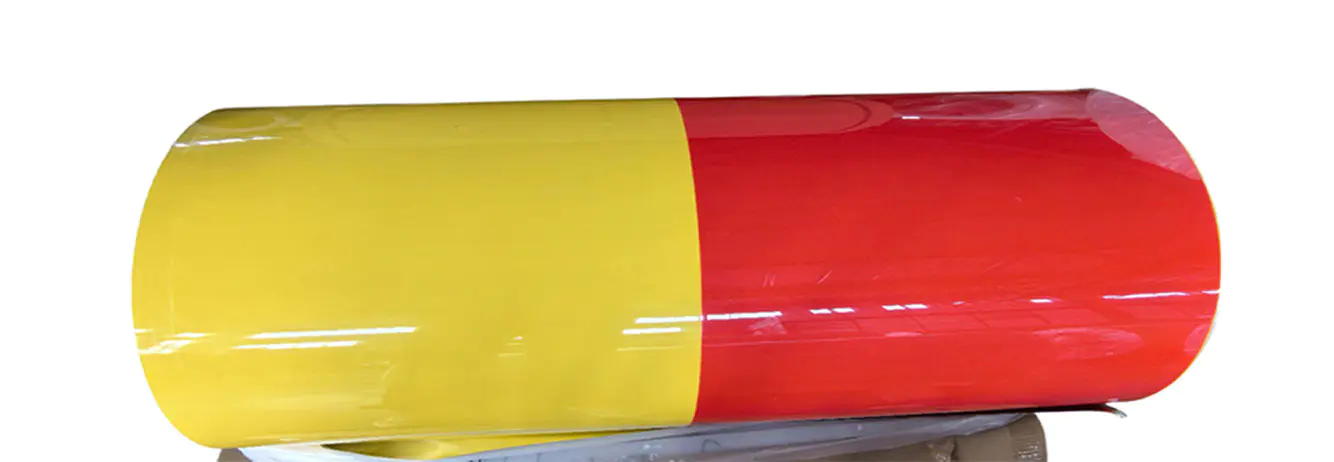
Color coated aluminum coil contributes to thermal adaptability through its carefully applied coating system. The coil undergoes pretreatment, primer application, and curing under controlled temperatures, which enhances adhesion and ensures that the coating can withstand repeated expansion and contraction cycles. The thickness, flexibility, and chemical composition of the coating allow it to follow the aluminum substrate’s movement without cracking or delaminating, even under significant temperature variation.
By combining these properties, composite panels maintain flatness and surface uniformity. This is especially important for exterior façades that must preserve visual consistency throughout daily temperature cycles and seasonal changes.
Key Factors Supporting Temperature Adaptation
The ability of color coated aluminum coil to respond to temperature variations is influenced by several technical factors, which can be summarized practically as:
- Coefficient of thermal expansion compatibility: The aluminum substrate and coating materials are selected to expand and contract at similar rates, reducing stress at the interface.
- Coating flexibility: Multi-layer coil coatings are formulated to tolerate dimensional changes without developing cracks or surface defects.
- Core material influence: Mineral-filled or fire-retardant cores provide additional stability by limiting warping and maintaining panel geometry.
- Panel assembly and fastening: Proper spacing, expansion joints, and mechanical fasteners allow panels to move slightly during temperature changes without compromising attachment or alignment.
Considering these aspects during design and installation ensures that panels respond predictably to environmental fluctuations while maintaining structural and aesthetic properties.
Coating Technology and Its Thermal Role
The pre-coated surface of aluminum coil not only defines color and texture but also affects how the panel handles heat. Coating systems such as polyester, PVDF, or modified fluorocarbon finishes are engineered to remain stable under temperature variations. The curing process applied at the coil stage enhances chemical crosslinking, which improves the coating’s ability to stretch or compress with the aluminum substrate.
This surface stability reduces the likelihood of common issues, including peeling, bubbling, or surface crazing, which can occur when coatings are not matched to the substrate’s thermal behavior. Additionally, the coating provides protection against ultraviolet light and environmental contaminants, which can exacerbate thermal degradation over time.
Design Considerations for Thermal Movement
The panel installation system plays a significant role in accommodating thermal changes. Mechanical fixing methods, such as subframes and clips, allow slight movement along the horizontal and vertical axes. Expansion joints positioned strategically across the façade absorb dimensional changes, preventing stress from accumulating at joints or corners.
Architects and engineers often integrate these design elements into the overall façade plan, taking into account expected temperature ranges in the building’s location. In large high-rise buildings, for instance, temperature differences between sun-exposed and shaded sides can be substantial, and appropriately designed panel systems reduce the risk of buckling or uneven surfaces.
Proper detailing around window openings, rooflines, and other penetrations ensures that the composite panels can expand and contract without causing water infiltration or misalignment. These considerations help maintain both surface aesthetics and structural integrity over the life of the building.


 中文简体
中文简体 English
 Português
 русский
 Español
 عربى
عربى